Can you study piano in a digital piano keyboard? Digital versus Acoustic.
Time ago, while examining an old piano owned by a lady who wanted an estimate to decide if it was worth it to repair, she came out with this question: Is it possible to use an electric piano for a child who is going to take piano lessons for the first time? Can you study piano in an electric digital piano?
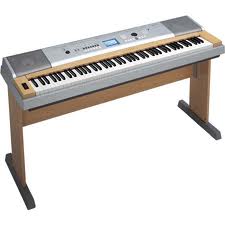 What a question for a piano tuner! Clearly the lady was pondering the possibility of buying a cheap digital thing in case the estimate for repairing and tuning the old piano was too high. I don’t have the habit of cheating my customers, but neither I am fond of throwing stones over my own roof. Sometimes truth match our own interest, and this was one of those rare occasions. So, sure not to be bias and well in peace with my concious, the answer to the odd question was obviously: (yes, you guessed it), No!
Undoubtedly digital pianos have qualities that make them attractive to many people. For example, its lighter weight and smaller size makes them easier to handle and place them anywhere in the house. They never get out of tune and don’t need servicing. Can easily change pitch, so you don’t need to transpose. Can play orchestral sounds, make rhythms and even record and reproduce what you play. Anybody can become an accomplish pianist just by pressing a key….! Or at least that’s what it appears.
Comparing the impressive array of features that digital piano has with that of the acoustic one, becomes clear that the digital piano wins by a landslide. So, what strange reason could motivate somebody to buy a traditional piano instead of a digital one? What disadvantage has the digital piano, if any?. Well, actually just one, and that is that the “digital piano” is not really a piano.
In my humble opinion, the term “digital piano” is inherently wrong and leads to confusion. Perhaps traditional piano makers shouldn’t allow “digital piano” makers to use the name “piano” to market their products. Same as they do with wines and cheeses producers, to ensure the authenticity of their products and guarantee its proper designation. No kidding, I’m serious. From here I propose the idea.
A real piano is made by craftsmen. Noble materials are used in its construction, different types of wood like mahogany, walnut, ebony, spruce etc. Also, steel, brass, leather, felt, ivory for the keys (no longer used) and so on. Its operation is completely mechanical or “analog” as they say now. The experience of playing a real piano has nothing to do with that of playing a digital instrument. The gentle subtle touch of the keys, the full rich authentic sound (even with its imperfections), the warmth and the feeling that conveys, the looks, the smell of wood, and so on. No, it is not comparable at all. Maybe I am a romantic, but I prefer the touch of wood rather than plastic.
In contrast, a digital piano is really a computer with added keys, cold and with no soul. It’s sound, although it can be nice, does not have the wrapping richness and tonal quality of the real thing. For the piano player, a major drawback of digital pianos is it’s poor key touch. Although some digitals try really hard to replicate the keyboard dynamics of acoustic pianos, never comes near as good as the authentic thing. In brief, from a serious musician point of view, a digital piano is a poor alternative to a real piano
Another very important point to take into consideration is the durability and life span of the instrument. An acoustic piano is very strong and good quality ones are made to last a long long time. Providing you take a minimum care (just tuning once a year), your piano will last a life time. The piano becomes a member of the family and can easily be passed to the next generation. I have known pianos dating from the 20’s (last century) in pristine condition.
On the other hand, an electric piano that is played reasonably often, will only last a few years. As it happens nowadays with any electric appliances, digital pianos are made so that they will be broken soon. Guess way? so that you buy again, naturally. The fact is, a digital piano can not take the heavy pounding of an acoustic piano. In the life span of a decent acoustic you could end buying a good number of electric ones. So, where is the saving?
So, going back to the original question, can you use an electric instrument to study piano? I sincerely believe than using an electronic keyboard to study piano is not advisable. I think it is important for the student to get accustomed from the beginning to play and appreciate the subtleties of a real piano. Also, it is a fact that a good instruments motivates the piano student and improves the rate of success in piano studies.
Probably you have guessed by now that am not precisely a digital piano lover… Then, is this a hatchet to digital electronic keyboards motivated by the obvious corporate interest? Not really, the idea is to objectively clarify the points. Neither digital pianos can be compare with real acoustic pianos nor real pianos can be compare with the digitals. This is so simply because they are different things for different purposes. Long life the piano!
Copyright © Juan Olalla 2011
Has this post been helpful to you? Do you have any question? You are welcome to leave a reply, your opinion and/or suggestions are highly appreciated. Thanks




Hi Juan Im a 14 year old playing with a Casio 610 and it just doesn’t sound right how does it work ? Every time I play music the pitch is not in tune
Hi Zuhair,
Sorry, but I do not know much about electronic digital keyboards. Best advice is to contact a local technician in electronic instruments. Regards, Juan
Juan,
I used to own an old Schteck baby grand. I sold it because the sound was not good and it did not hold the tuning very well. I bought a Yamaha P-155 electronic piano (keyboard, really) that has a reasonably nice piano sound while I look for a “real” upright piano. I am currently shopping and found the following instruments in Santiago de Chile where I live:
A new Perzina that goes for about 5500 euros. Sounds real nice. I also looked at a new Boston for about the same money, a new Kawai for about half as much and a Yamaha U1 (used but in good shape) for about the same price as the Kawai. There are also many old pianos around. Some of them of famous brands (Stainway, Bluthner, Bechstein, etc) , but I do not like old pianos. They just don’t sound right, the action shows the age of the instrument and are a pain to maintain.
Any advise that you can give me?
Hi Ricardo,
Digital pianos are alright but can not be compare to acoustic ones, they are simply different instruments.
Yes, I agree it is better to buy a new or nearly new piano rather than an old one. All the pianos that you mention are ok and will surely satisfy you. I have try and like those Perzinas, nowdays one of the best pianos made in China. Boston pianos are also ok, they are part of the Steinway group but made by kawai. The U1 by Yamaha is a “best seller” but depend in what condition it is, look the serial number to know how old is the piano. Probably the best value for money are Perzina or kawai, any of them will do nicely
Regards,
Juan
Hi donny,
That all depends on the piano and how well or bad it has been maintained. For a good quality piano I would say the life span is about 50 years, by that time, if you want to keep the piano in a reasonable working condition probably a major renovation will be needed
Concerning a digital piano, providing it has a medium wear, I would put the life span about seven years, certainly not more than ten. Of course as I said before, that is relative and depends much about the person who owns the instrument.
Hi Robert,
i currently own a digital piano. But one day i was playing guitar and i switched to piano and realized every single note on the piano was half a step flat. Do you have a solution for this? please email me at [email protected]
Hi Tony,
Probably the piano that you was playing was half a step flat and that obviously is not right. Solution for that? call the piano tuner to pitch rise the piano to standard A 440, which by the way should be done in two times. Regards, Juan
Hi Juan,
I enjoyed reading your post. You make a very strong case for REAL pianos. I certainly understand why you prefer them over digital pianos. As you say, the digital piano lacks the “soul” of a real piano.
Can I ask your opinion on something though. I’ve been checking out the Yamaha P95 and some people say it’s a very good substitute if you don’t have space in your house/home for an acoustic piano.
Do you think it’s ok to get a digital piano (instead of an acoustic) if you just don’t have enough space for a real piano?
Thanks for your help. I will be recommending your site for sure,
Robert
Hi Robert,
Thanks, for your comment. That’s right, the aim of the article was to point out the fact that an electric piano is not a real piano, the terminology gets confusing! Personally, I have nothing against digital pianos, I have myself an old Yamaha Clavinova which I use specially at night if I want to play without disturbing anybody.
I don’t know the Yamaha P95, but I have tried the P250 and in my humble opinion is one of the best digital pianos I had ever try. I suppose the P95 must be also good, but never a substitute for the real thing. Best regards, Juan
By the way, I also love Beethoven, specially the 6 and 9 Symphony.